


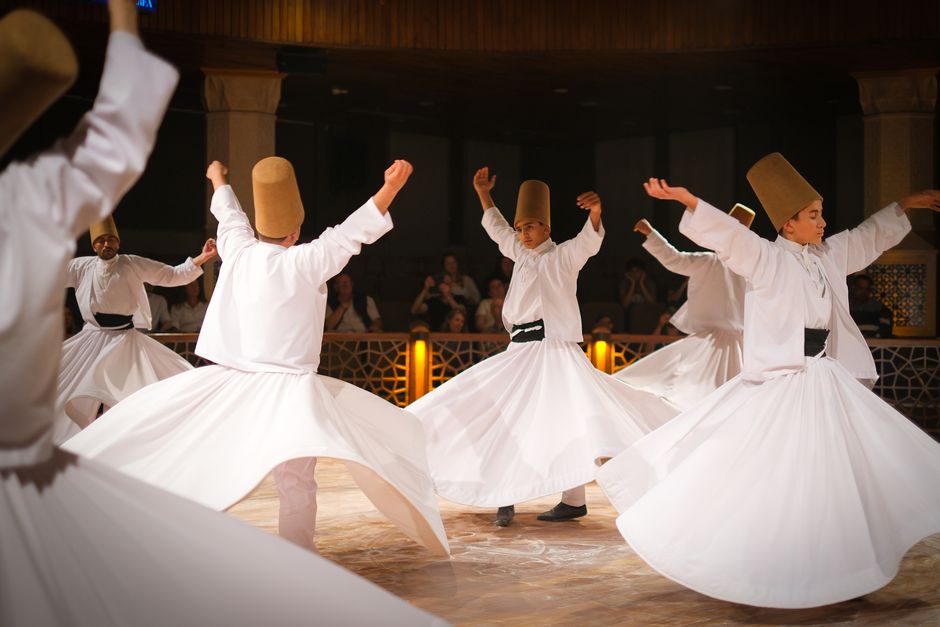
Photo by Doğukan Koçan on Pexels
(toc)
In the city of Konya, Turkey, thousands of people flock to the streets there every December, attracted by a spectacle they've come to see men who have spun themselves into a frenzy of prayer in tall felt hats.
The Same ceremony is not a performance, but a ceremony by followers of the Melville Order, the poet of the 13th century, Rumi. It's not just a distinction, it's a very important one. The dervishes who are turning in their white robes are not performing a tourist act, but they are engaged in a form of physical prayer (Sikora), which is a repetitive act of the body and is intended to help them achieve their state of meditation in order to be able to reach God. So, for the sake of argument, some of the venues hold shows for tourists, year round, which are okay. The true Sea is actually during the Sheba Arms commemoration when, on December 17th, the anniversary of Rumi's death, he was "married" to the divine, which he referred to as his "wedding night.
What You'll See (and Feel) in the Hall
The ceremony is held in a large modern hall which can accommodate a few thousand people, the Konya Culture Centre. Arrive early. The floor seating fills early, and the upper level gallery is an excellent seat, but is further from the sounds.
The thing you don't hear about is the sound. As the dervishes approach, an airy, reed-like, almost plaintive note starts playing, like it's coming from all directions. This stuff runs through the room, and it's really not easy to say without going on a drama rampage. That sound was the soul leaving the body," said the man who was sitting next to me, a retired teacher from Ankara. He had no time for poetry. He meant for the guests to come in person!
The dervishes enter in black cloaks, which they take off to show the white robes underneath, the black symbolising the tomb, the white symbolising the shroud, and the tall hat with the camel's hair on it is the symbol of the tombstone. All elements of the dress have a symbolic meaning. They start moving slowly, holding their arms up, turning the palm up to the Divine grace and the palm down to pass it on to the ground.
Practical Things Worth Knowing
- Tickets are free, but require prior reservation on the Konya Metropolitan Municipality's website; they sell out fast. Book your tickets weeks ahead of time.
- Technically, they allow photos to be taken, but flash is not allowed, and you'll get a strong expression from the ushers if you have your phone's screen too bright.
- Hall is not well heated. Take an extra layer which can be put on without making too much noise.
- The ceremony is about 90 minutes long, without intermission.
- The hotel is located in the heart of the city.6. There are many tall buildings in the area. Don't make a fashion statement, just dress appropriately for the weather, it's noticed and appreciated.
Getting There and Where to Stay
The Konya railway station is situated near to the city centre and the city can be reached by high-speed train in about 3 hours from Ankara. Alaaddin Hill is home to budget hotels, which all charge less than 40 euros per night in the month of December. Most of them are within a 5 minute walk from the Mevalonate Museum (Rum’s current tomb) where one should spend a full morning before the evening ceremony.
One sincere comment: In December, the city centre is smelly, smelly, smelly–roasted chestnuts, diesel exhaust, roasted chestnuts, diesel exhaust. It's by no means unpleasant, actually. It simply has the fragrance of a city in Turkey doing business in the cold of winter – which is part of the trip.
Individuals are not as loud during the Same ceremony as they were before the ceremony. Don't take my word for it, you can see it for yourself. After about an hour of slow flute music, and men spinning silently, it's just as if you hadn't heard any noise. So, whatever the reason is—whether it be Rum, Turkey or simply from curiosity—Konya is worth the trip in December.
Comments
Post a Comment